
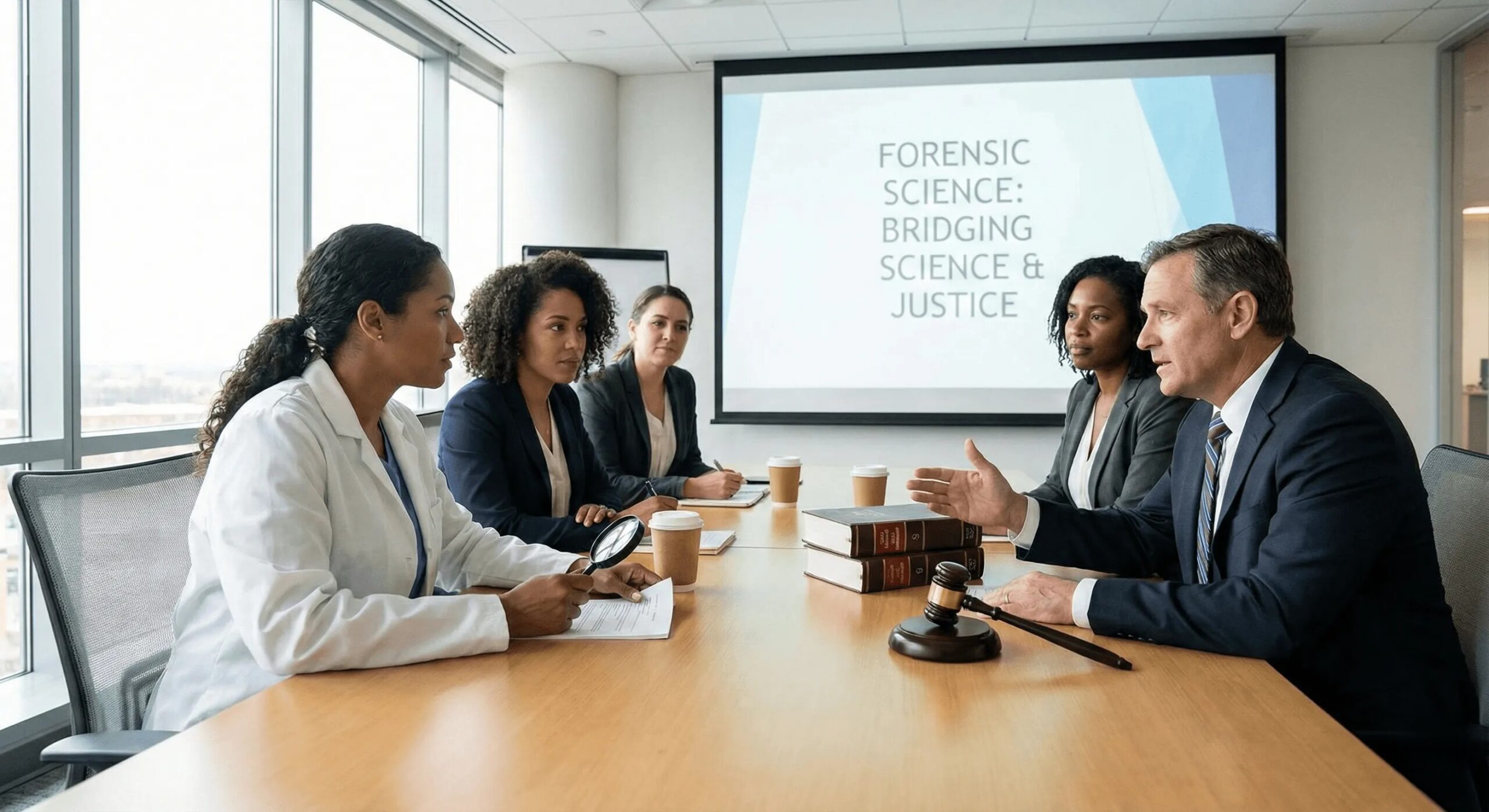
Why Forensic Science Represents a Unique Harmony Between Science and Justice
ForensicWhy Forensic Science Represents a Unique Harmony Between Science and Justice
Justice has always rested on our capability to uncover the verity. For centuries, societies reckoned on admissions, substantiation statements, and particular interpretations of events. While these styles offered sapience, they were also shaped by mortal memory, perception, and emotion — factors that can fluently blur the verity.
The rise of forensic wisdom and forensic science changed that ever.
Moment, forensic wisdom acts as a ground between scientific disquisition and the judicial system. It brings sense, perfection, and neutrality into courtrooms, icing opinions are grounded not simply on hypotheticals but on substantiation that can be tested, vindicated, and explained. What makes this field extraordinary isn’t only its slice-edge tools but the gospel behind it — a fidelity to verity, delicacy, and fairness.
1. The Scientific Soul of Forensics – Anchored in Substantiation

Although numerous people associate forensics with thrilling television shows, its real-world foundation is deeply academic and largely interdisciplinary. Forensic laboratories are more exploration-acquainted than dramatic; every test, every observation, and every conclusion must repel scientific scrutiny.
An Interdisciplinary Hustler
Forensic wisdom thrives because it pulls together perceptivity from several branches of wisdom:
- Biology: DNA profiling, blood analysis, identification.
- Chemistry: toxicology, narcotic discovery, explosive residue analysis.
- Drugs: ballistics, toolmark analysis, accident reconstruction.
- Digital lores: cyber forensics, mobile birth, network analysis.
- Psychology: profiling, behavioural assessment, motive interpretation.
This rich mix helps forensic professionals view a case from multiple angles, reducing query and strengthening conclusions.
Beyond Widgets – Science as a Method
While high-tech tools like DNA sequencers, GC-MS systems, or deep-comparison microscopes enhance delicacy, what truly defines forensics is its methodology.
Every forensic conclusion must arise from:
- methodical data collection
- controlled trial
- validated and peer-reviewed procedures
- objective interpretation
- transparent attestation
- acknowledgement of limitations
In simple terms, forensic wisdom operates with one rule: substantiation must speak for itself.
2. Justice – The Twinkle of Forensic Practice
Forensic wisdom isn’t an intellectual exercise; its purpose is profoundly ethical. It strengthens the justice system by filling the gaps that mortal perception and evidence can not cover.
Bringing Clarity into Legal Opinions
Courts face tough questions:
What happened? Who’s responsible? How confidently can we say so?
Forensic substantiation helps answer these with clarity. A DNA match, a chemical hand, a ballistic pattern, or indeed a timestamp on a digital train can illuminate details no substantiation could directly recall. It transforms query into understanding.
Shielding Society from Wrongful Persuasions
One of its topmost benefactions is its part in precluding — and occasionally capsizing — deliveries of justice.
DNA exculpations alone have exposed how unreliable traditional substantiation can be when taken at face value.
Wisdom brings impartiality into the justice process.
It carries no bias, no emotion, and no motive.
3. Where Science Meets Justice – A Perfect Partnership
The harmony between these two fields isn’t accidental; it comes from their participating pursuit of verity.
Wisdom Gives Tools; Justice Gives Purpose
Scientific data — no matter how accurate — remains deficient until interpreted within the legal frame.
Also, justice can not operate effectively without factual grounding.
Forensic wisdom sits exactly at this crossroad, transubstantiating scientific compliances into meaningful legal sapience.
Neutrality as a Guiding Principle
A substantiation may be forgotten.
A concession may be constrained.
But substantiation — whether a point, a fibre, or a digital log — remains harmonious.
This stability gives courts the confidence to make life-altering opinions.
The Expert Witness – A Translator in the Courtroom
Forensic scientists frequently take on the part of preceptor, explaining complicated scientific findings in a way judges and attorneys can understand. They must remain neutral, clear, and honest about what the wisdom can — and can not — conclude.
Advancing Technology Strengthens Justice
Rapid DNA testing, AI-powered pattern recognition, and advanced digital forensics are reshaping examinations. As tools evolve, so does the justice system’s capability to uncover verity fleetly and directly.
4. The Practical Machinery of Forensics in the Justice System
Crime Scene Investigation
The forensic process begins long before lab analysis. At the crime scene, scrupulous attestation and careful substantiation handling set the stage for everything that follows. One overlooked footmark or fibre can shift the entire direction of a case.
Laboratory Examination
Inside the laboratory, experts check substantiation with perfection. Each result contributes a piece to the larger narrative of what passed.
Forensic Medicine and Pathology
In cases involving death, forensic pathologists help determine cause, manner, and timing — critical rudiments that shape legal opinions.
Digital Forensics in a Technological World
Phones, computers, GPS data, CCTV recordings — ultramodern crimes nearly always leave a digital trail. Digital forensics has become one of the swift-growing and most essential branches of the field.
Behavioural Wisdom and Psychology
Understanding geste provides a pivotal environment. Forensic psychology helps assess intent, internal state, credibility, and implicit threat.
Also Read: Role of Impressions in Forensic Science
5. The Ethical Compass of Forensic Professionals

Because their work can impact verdicts and determine the fate of individualities, forensic scientists must uphold strict ethical norms:
- Neutrality in analysis
- Translucency in reporting
- Confidentiality of sensitive information
- Responsibility for every conclusion
Ethics ensure that scientific power is used responsibly.
6. The Broader Reach of Forensic Science in Society
Strengthening Public Trust
When legal opinions are grounded on scientifically supported substantiation, public confidence grows.
Deterrence and Crime Prevention
Knowing that indeed bitsy traces can reveal identity discourages numerous implicit malefactors.
Philanthropic Benefactions
Beyond felonious cases, forensics helps with:
- disaster victim identification
- mortal rights examinations
- environmental crime analysis
- missing persons examinations
Shaping Policy and Mindfulness
Patterns observed in forensic casework frequently guide policymakers in perfecting safety laws and forestallment strategies.
7. The Road Ahead – The Future of Forensics and Justice
The coming phase of forensic invention may bring:
- movable DNA analyzers
- AI-driven crime scene reconstruction
- bettered toxicology and behavioural analytics
- flawless integration of natural and digital substantiation
Each advancement deepens the connection between wisdom and justice.
Conclusion
Forensic wisdom is far further than a set of laboratory ways. It’s a gospel — a commitment to using scientific verity to uphold justice.
In a world where stories may discord and recollections may fade, forensic substantiation provides clarity and certainty. It gives society a way to make opinions grounded not on supposition, but on empirical knowledge.
At its core, forensic wisdom is a pledge that verity matters, that substantiation speaks, and that justice must always be informed by data.
FAQs
Why is forensic wisdom getting more important?
Because it provides objective substantiation that strengthens examinations and reduces reliance on private evidence.
How does forensics help unlawful persuasions?
Ways like DNA profiling and digital analysis can confirm or count suspects with remarkable delicacy.
What are the major branches of forensic wisdom?
DNA analysis, toxicology, ballistics, characteristic, questioned documents, digital forensics, and forensic psychology.
Do forensic experts appear in court?
Yes. They explain their findings to help judges and attorneys understand the scientific aspects of the case.
Why is digital forensics a critical moment?
Because nearly every ultramodern crime involves mobile bias, computers, or digital vestiges.
Can forensics break every case?
Not always, but it significantly improves the delicacy and understanding of what happened.
What developments are shaping the future of forensics?
AI-powered tools, rapid-fire DNA technology, 3D reconstruction styles, and integrated forensic systems.